
Snus is moist tobacco placed under the upper lip instead of being smoked. That is the original definition and it still holds. What has changed is the shelf: in Switzerland the same word now covers tobacco snus and tobacco free nicotine pouches, which behave alike and contain something quite different.
What snus is
A portion of moist, ground tobacco, usually packed into a small pouch. It sits between the upper lip and the gum, and the nicotine passes through the lining of the mouth.
Nothing is burned, nothing is inhaled, and nothing is spat out. That last point separates snus from American chewing tobacco.
It comes from Sweden, where it grew out of dry snuff in the 18th century. The Swedish origin is why so many brand and format names on a Swiss shelf are Scandinavian.

How to use snus
The portion goes between your upper lip and gum, on either side, and stays there. You do not chew it and you do not move it around, because chewing damages the pouch and releases everything at once.
The effect builds over the first minutes rather than arriving instantly, since the nicotine has to cross the lining of the mouth. Expect a warm tingle under the lip within a minute or two, then a steady effect.
- Place the pouch, then leave it alone.
- Saliva can be swallowed. Spitting is not part of it.
- Remove it when the flavour fades, and use the lid compartment for the used pouch.
How long does snus stay in your mouth
Around thirty minutes is the usual answer, and that is roughly where the flavour gives out. Most of the nicotine has left the pouch well before the half hour mark, so leaving it in longer adds very little.
Beginners often do the opposite and take it out after five minutes because nothing seems to be happening yet. That is too early. The build-up is slower than a cigarette, not weaker.
How much nicotine is in snus
It depends on the tin, and more importantly on which scale the tin uses. This is where most comparisons go wrong.
Two different scales
- Per gram is traditional for tobacco snus. The nicotine is divided by the weight of the contents, which produces a number often in the teens or twenties.
- Per pouch is increasingly used for nicotine pouches, and it is the more useful figure because it tells you what actually goes under your lip.
The two are not comparable. Do not match a per gram number against a per pouch number and assume equal strength. ALP labels per pouch, at 6mg, 12mg and 18mg, and the mechanics behind those numbers are on our page about nicotine pouches.
What is the strongest snus
Extreme tins exist well above 40mg per gram, and they are made for people with a long established tolerance rather than for a first try. The strongest pouch in the ALP range is 18mg per pouch.
Strength on the label is only half the story. A dry pouch with a high number can feel weaker than a moist one with a lower number, because a dry pouch releases slowly and unevenly.
Snus formats: loose snus and portion snus
Two basic forms, with several variations inside the second.
| Format | What it is | Notable for |
|---|---|---|
| Loose | Unpackaged moist tobacco, shaped by hand | Traditional, needs practice |
| Original portion | Moistened pouch, darker in colour | Fast release, more staining |
| White portion | Drier pouch surface | Slower release, lasts longer |
| Slim | Narrower and longer pouch | Sits less visibly under the lip |
| All white | No tobacco leaf, plant fibre filling | No staining, flavour only from flavouring |
Can you take snus in your luggage
Physically it travels easily. The tins are small, nothing leaks, and there is no liquid restriction to worry about. Hand luggage is generally the simpler choice, because tins in checked bags sit in an unheated hold and a very cold tin is not a better tin.
The part that matters is the destination, not the flight. Rules on oral tobacco and on nicotine pouches differ sharply from country to country, and some places that allow one prohibit the other. Check the rules for where you are going, and for any country you change planes in, before you pack.
- Keep tins in their original packaging, so the contents and the strength are identifiable.
- Carry a personal quantity rather than a supply that looks commercial.
- Airline and airport policies sit on top of national rules, so verify both.
How long does snus keep
An unopened tin keeps for months. Heat and air shorten that, not time on its own.
Store tins cool and dry with the lid closed, away from direct sun and warm surfaces. A tin left open dries out, and once the moisture is gone the flavour and the release go with it. Refrigerating opened tins is not necessary, but it does slow the drying.
Snus, all white and nicotine pouches
Here the word stops being precise, and the difference decides what you are buying.
Snus in the strict sense contains ground tobacco: brown pouches, tobacco underneath the flavouring, noticeable staining. All white or nicotine pouches contain no tobacco leaf, the filling is plant fibre and the nicotine is added separately.
In everyday speech both are called snus. On the shelf they are two products, and we go through the practical differences on snus without tobacco. Wikipedia keeps a neutral overview of snus outside the trade.
Nicotine is nicotine
With or without the tobacco leaf, both categories contain nicotine, and nicotine is highly addictive. Both are intended solely for adults aged 18 and over who already use nicotine.
Snus in short
- Origin
- Sweden, in use since the 18th century.
- Where it sits
- Between the upper lip and the gum.
- Time in place
- Around 30 minutes.
- Spitting
- Not part of it, unlike chewing tobacco.
- Contains tobacco
- Yes, unless the tin says all white or tobacco free.
- At ALP
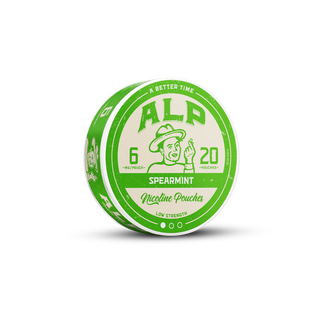
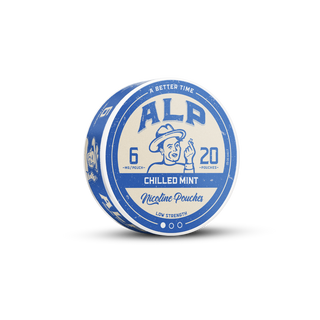
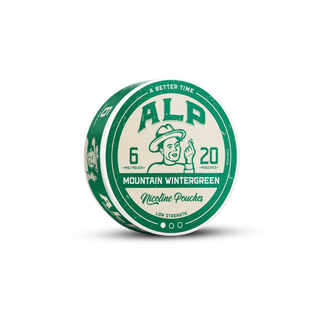
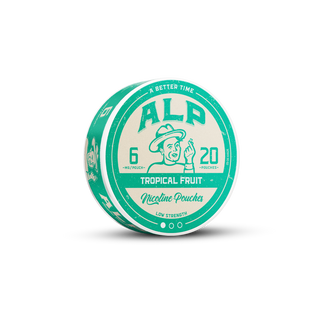
- Tobacco free only, across the whole range and the Fruit Line.