
Most people who try a nicotine pouch once and never touch one again picked the wrong strength. A 6mg pouch and an 18mg pouch look identical, sit under the lip for the same length of time and cost the same. The difference shows up in the first five minutes, and by then it is too late.
What is a nicotine pouch
A small white cushion of plant fibre, nicotine, flavour and humectants. It sits between your upper lip and gum, releases nicotine there for about half an hour, and then goes into the lid of the tin.
No smoke, no vapour, no spitting. And no tobacco leaf, which is the difference from traditional snus.
You do not chew it. The pouch sits there, and after a couple of minutes most people forget it is in.

How do nicotine pouches work
The nicotine crosses the lining of your mouth rather than going through your lungs. That single fact explains why a first pouch goes wrong for so many people.
Smoking delivers nicotine within seconds. Through the gum it takes several minutes before the effect is clear, then it holds fairly steady while the pouch is in and tails off at the end.
If nobody tells you that, you add a second pouch after two minutes because nothing seems to be happening. Both then arrive at once. One pouch, thirty minutes, wait. The practical side of using one, from placement to how long it stays in, is covered on what is snus.
Nicotine pouch strengths: 6mg, 12mg and 18mg
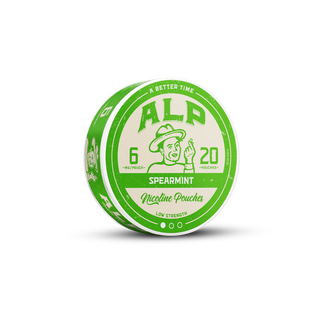
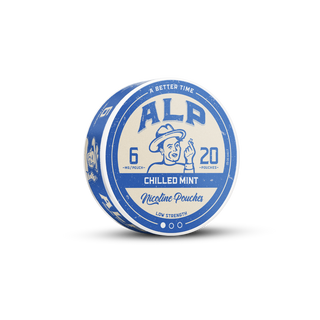
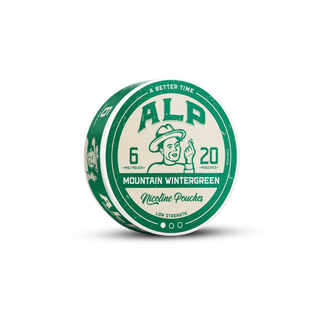
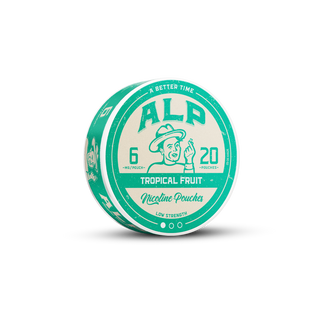
On an ALP tin the number is the nicotine in one pouch. Six milligrams means six milligrams per pouch, with no conversion needed.
| Strength | Who it suits | What to expect |
|---|---|---|
| 6mg | First time with pouches, occasional use, anyone who wants flavour ahead of the hit | Clearly noticeable but mild. Comfortable for a whole session without turning harsh |
| 12mg | Regular use, people moving across from cigarettes or vaping, anyone who finds 6mg fades too fast | Noticeably stronger through the middle of the session. The usual step up |
| 18mg | Experienced users with an established tolerance | Strong from the first minute. Not a starting point |
Between two steps, take the lower one. Moving up costs you one tin. After a pouch that was far too strong, most people put the category away for weeks.
Why two pouches with the same number feel different
The milligram figure says how much is in there. It does not say how much arrives, or how fast. Four things move the result.
- Release speed. How quickly the nicotine leaves the pouch decides how hard the first minutes feel. A fast release reads as strong even when the total content is modest.
- Moisture. A dry pouch needs saliva before anything happens. One that arrives moist starts working immediately.
- Flavour. Cooling amplifies the sensation. A sharp mint feels stronger than a fruit pouch at the same milligrams, because the cooling and the nicotine tingle land in the same place at the same time.
- Format. A slimmer pouch sits closer to the gum across its whole surface. Same content, different contact.
This is why numbers across brands are a poor guide. Two tins marked 12mg can behave nothing alike.
Why dry pouches ruin the category for people
Moisture is the difference you notice in the first ten seconds, and it is the thing most brands quietly economise on.
A dry pouch is cheaper to produce, stores longer and survives shipping better. Under the lip it behaves badly: it feels rough, it sits there doing nothing while your own saliva slowly wakes it up, and the flavour is gone long before the pouch is.
A moist pouch starts releasing straight away, holds the flavour across the session and stays comfortable. ALP is filled deliberately moist for exactly that reason. If a previous tin from another brand put you off pouches, dryness was the likely culprit rather than the format.
Which flavour goes with which strength
Flavour and strength interact, so picking them together works better than picking them separately.
- Starting out: a mint at 6mg. The cooling carries the experience while the nicotine stays gentle.
- Coming off cigarettes: 12mg, flavour to taste. This is where most regular users settle.
- Flavour first: fruit at 6mg or 12mg, where the taste is not competing with a heavy nicotine load. The Fruit Line is built for this.
- Established tolerance: 18mg in whichever flavour you already know.
All flavours come in all three strengths, so you can change one without changing the other. The full range shows the combinations, and the bundles let you compare several in one order.
Nicotine pouches and snus are not the same thing
In Switzerland both words are used for the same thing, because real tobacco snus is available here, unlike in most of the EU. Somebody saying snus is not necessarily talking about the same product.
Snus contains ground tobacco. The pouches are brownish, they stain more and they taste of tobacco. Nicotine pouches, often called All White, contain no tobacco leaf, and the taste comes entirely from the flavouring.
How to tell them apart on the shelf is covered on snus without tobacco. For background outside the trade, Wikipedia keeps a neutral overview of tobacco free nicotine pouches.
For adults 18 and over
Nicotine pouches contain nicotine, and nicotine is highly addictive. They are intended for adults who already use nicotine. If you do not use nicotine today, this is not a good place to start.
What is on an ALP tin
- Strengths
- 6mg, 12mg and 18mg per pouch, across the whole range.
- Per tin
- 20 pouches.
- Labelled
- Milligrams per pouch, not per gram.
- Filling
- Plant fibre, kept deliberately moist.
- Tobacco leaf
- None.